Your Cart is Empty

Imagine standing in the crisp morning air of July, looking up at a cluster of stars that has guided New Zealanders for centuries, yet feeling unsure of what they truly represent. It's a common feeling as we embrace our newest public holiday. Many of us want to honour the season but feel a bit lost when it comes to the deep cultural roots or explaining the nine stars of matariki to our children. It's natural to want your celebrations and gifts to hold more meaning than just another day off work.
This guide will help you bridge that gap by exploring the rich history of the Māori New Year and showing you how to celebrate with intention. You'll learn the unique significance of each star in the cluster and mark your calendar for the official public holiday on Friday, 10 July 2026. We'll also explore how to choose symbolic gifts, such as sterling silver Koru pendants, that represent new beginnings and remembrance. By the end of this article, you'll feel confident sharing these traditions with your family and finding the perfect way to honour the past while looking toward a bright future.
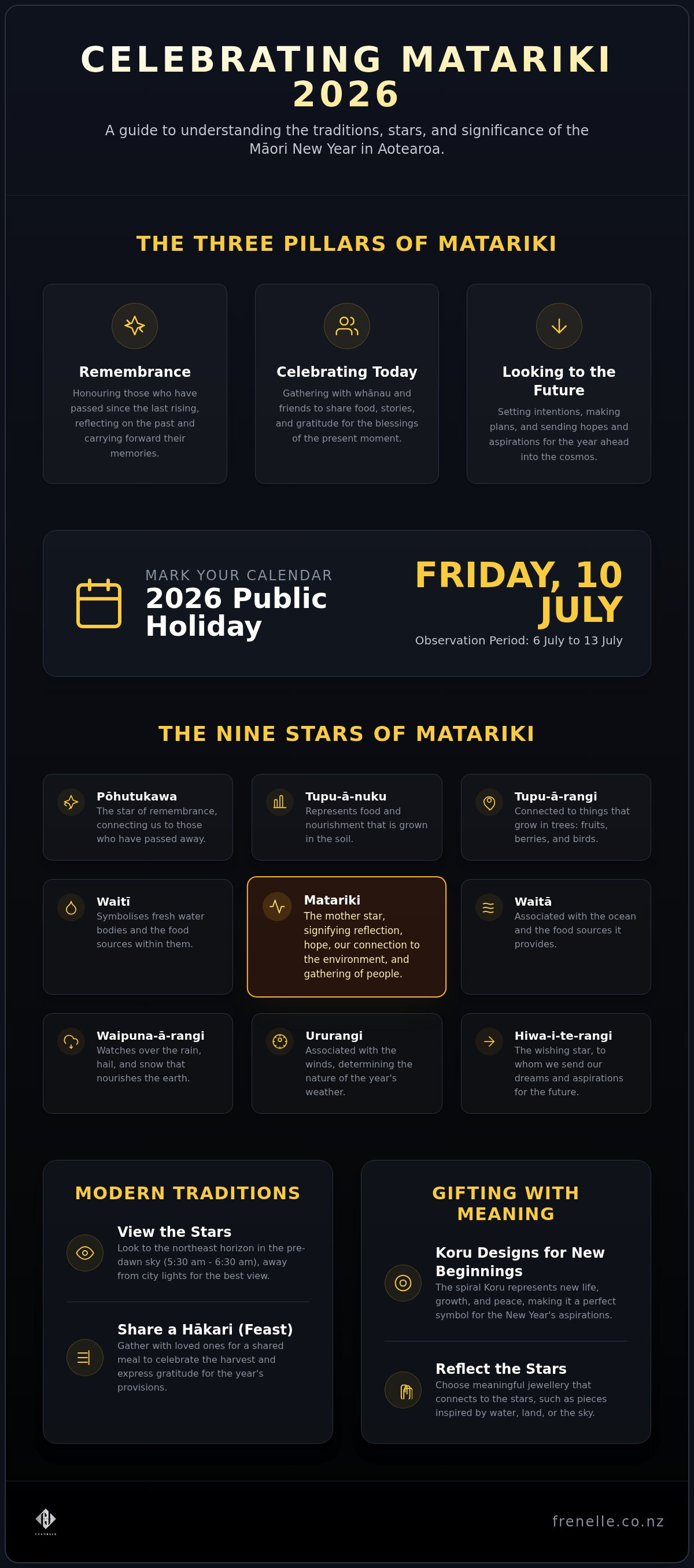
Matariki is the Māori name for a cluster of stars also known as the Pleiades. Its midwinter rising marks the start of the Māori New Year, te Mātahi o te Tau. This celestial event isn't just a point on a calendar; it's a profound cultural moment that connects us to the cycles of the land and sea. For many New Zealanders, Matariki has become a time to pause and align with the natural world. The official public holiday for 2026 falls on Friday, 10 July, though the broader observation period begins on 6 July and runs through to 13 July.
The celebration is built upon three core pillars. First, it's a time for remembrance, where we honour those who have passed away since the last rising. Second, it's about celebrating the present by gathering with whānau and friends to share food and gratitude. Finally, it's a period for looking forward, setting intentions, and planning for the year ahead. The 2026 theme, "Matariki Herenga Waka – For Everyone", invites all people across Aotearoa to participate in these traditions together.
Te Rā Aro ki Matariki is the first public holiday in New Zealand to specifically recognise te ao Māori, the Māori world view. It represents a significant shift in our national identity, moving away from imported traditions toward something deeply rooted in our own soil. As the cold winter settles in, this holiday provides a space for reflection. It marks the transition from the quiet of winter reflection to the active planning required for spring. By acknowledging the rising of the stars, we celebrate the unique cultural heritage that makes our country special. The national broadcast and ceremony for 2026 will be hosted by Ngāti Whātua Ōrākei in Auckland, providing a central point for the country to connect with these ancient practices.
To see the stars, you'll need to wake up early. The best time for viewing is in the pre-dawn light, usually between 5:30 am and 6:30 am. Look toward the northeast horizon just before the sun rises. You can find the cluster by first locating the constellation of Taurus and then looking slightly above and to the left of the "V" shape. While the cluster is visible from most parts of New Zealand, you'll get the clearest view away from city lights on a crisp, cloudless morning. Some regions, particularly in the South Island, may also look for Puanga, the star Rigel, which rises slightly earlier and higher in the sky. This provides a beautiful alternative for those in areas where the main cluster is more difficult to spot.
The cluster contains nine stars, each with a distinct role in Māori New Year traditions. At the centre is Matariki, the mother star, who signifies health and well-being. She is surrounded by her children, each overseeing a specific part of the natural world. Waiti and Waita represent the water; Waiti looks over fresh water and its creatures, while Waita watches the salt water of the ocean. Above them, Waipuna-a-rangi focuses on the rain and sky, while Tupu-a-rangi is tied to the forest, native birds, and trees.
Looking toward the earth, Tupu-a-nuku represents food grown in the soil, and Ururangi governs the winds. Two stars hold deeply personal significance for our inner lives. Pohutukawa is the star of remembrance, helping us honour those who have passed. Finally, Hiwa-i-te-rangi is the star we look to when setting goals for the future. Together, these stars provide a map for living in harmony with the environment and our community.
Understanding the connection between these stars and the environment helps us appreciate our place in New Zealand's landscape. Waiti and Waita remind us of the importance of our pristine waterways and coastlines, from the Waikato River to the shores of the Bay of Plenty. Tupu-a-rangi connects us to our ancient ngahere or forests. If you're looking for a gift that reflects a loved one's passion, consider these meanings. A keen gardener might resonate with Tupu-a-nuku, while someone who finds peace by the lake would appreciate a tribute to Waiti. You can find a wide range of jewellery featuring natural motifs that mirror these celestial connections.
Hiwa-i-te-rangi is the star of prosperity and hope. It's the wishing star of the cluster, where we send our dreams and aspirations for the coming months. For many New Zealanders starting a new chapter in 2026, such as a career change or a new home, this star offers a sense of guidance. It's a time to manifest future goals and desires with clarity. Whether you're planning a wedding or celebrating a milestone birthday, acknowledging this star adds a layer of spiritual significance to your intentions. Focusing on this star during matariki helps us stay grounded while reaching for our highest potential.
Observing matariki today is a beautiful blend of ancient customs and modern family life. At the heart of the celebration is the hākari, or shared meal. This gathering celebrates the harvest from the previous season and brings whānau together during the coldest part of the year. Whether it's a traditional hāngī or a simple potluck dinner, the focus is on connection and gratitude for the abundance provided by the land and sea. It's a time to slow down and appreciate the people who make our lives meaningful.
For those looking for a deeper spiritual connection, the practice of hautapu is a central tradition. This ceremony involves preparing specific foods that represent the different stars of the cluster, such as kumara for Tupu-a-nuku or birds for Tupu-a-rangi. The steam from the cooked food is released as an offering to the stars. It's a sacred moment that acknowledges the relationship between the people and the heavens, ensuring a prosperous year ahead. Even in a modern setting, this ritual reminds us of our reliance on the natural world.
Beyond the communal feast, the holiday encourages individual reflection. Many New Zealanders now use this time to write down their goals and wishes for the coming year. This honours Hiwa-i-te-rangi, the star of prosperity. It's also a time for quiet moments to remember those who have passed away. By speaking their names or sharing stories of their lives, we keep their memory alive during the winter months. This cycle of remembrance and dreaming creates a powerful sense of continuity.
Children are often the most enthusiastic participants in the Māori New Year. You can involve them by teaching the names of the nine stars through songs, crafts, or early morning stargazing. Long winter nights are perfect for storytelling and sharing family history. This is also the time of Kāinga Hokia, the call to return home. It's a powerful reminder to reconnect with your roots and visit the places that shaped your identity. These simple acts help children feel a sense of belonging and cultural pride from a young age.
As we celebrate new beginnings, exchanging tokens of affection has become a meaningful part of the season. This isn't about mass-produced items. Instead, it's about finding quality pieces that hold personal significance and represent the themes of the holiday. Giving a small gift is a way to express gratitude to those who have supported you through the past year. Whether it's a piece of jewellery featuring a Koru or a simple handmade card, the intention behind the gift is what matters most. These gestures reinforce bonds and mark the start of the year with a spirit of love and appreciation for your community.
Selecting a gift for matariki involves more than just picking something beautiful. It's about finding a piece that acts as a celestial bridge, carrying the stories of the nine stars into our daily lives. While the stars themselves are only visible for a few weeks, symbolic jewellery allows those meanings of health, memory, and prosperity to stay with us all year round. Choosing a physical token can help ground those intentions of remembrance and hope. These pieces become modern heirlooms that tell the story of a specific year and the goals you've set for your whānau.
Māori Koru jewellery is a popular choice for this season. The design represents the unfurling silver fern frond, which symbolizes new life, growth, and peace. It's a perfect match for the themes of the Māori New Year, where we look forward to fresh starts and personal development. For those who feel a deep connection to the water, freshwater pearl jewellery serves as a beautiful tribute to Waiti and Waita. These gems, formed in water, remind us of the importance of our rivers and oceans. Tree of Life pendants are another powerful option. They represent the connection between the earth and the stars, grounding us while we reach for our goals. If you want something that reflects the literal beauty of the star cluster, sterling silver earrings are ideal. The bright, shimmering metal mimics the cold winter light of the stars as they rise in the pre-dawn sky.
The Koru is more than just a decorative pattern; it's a representation of the perpetual movement of life. It signifies personal growth and the promise of a peaceful future. Because the holiday marks the start of a new cycle, Māori Koru jewellery is the quintessential gift for anyone embarking on a new journey in 2026. It serves as a wearable reminder of the strength and resilience needed to unfurl into your full potential. Whether you're celebrating a graduation or a new career path, this symbol carries a message of encouragement and hope.
Honouring the stars often means honouring the environments they protect. Choosing leaf and floral motifs is a thoughtful way to acknowledge Tupu-a-nuku and Tupu-a-rangi, the stars of the soil and the forest. When selecting these daily-wear pieces, durability is just as important as design. Understanding Mohs hardness helps you choose gems and metals that can withstand the rigours of everyday life without losing their shine. This scale measures how resistant a material is to scratching, which is vital for rings or bracelets worn every day. 925 sterling silver remains a timeless choice for celestial-themed gifts because of its high value and lasting quality. You can browse our wide range of symbolic designs to find a piece that truly resonates with your loved ones this season.
Frenelle was born from a passion for beautiful, high-value designs that don't require a luxury budget. Founded in 2018 by Judy Wood, our online-only boutique has grown into a trusted destination for New Zealanders looking for meaningful gifts. We understand that matariki is a deeply personal time for many families. It's a season that deserves a special token to mark new chapters and honour those we love. Because we're an independent business, we take immense pride in every piece we select for our collections. We ensure that our jewellery reflects the same quality and care you put into your own holiday traditions.
Our focus is entirely on the New Zealand market. We provide national delivery from our home base to everywhere from Auckland to Invercargill. This means your gifts arrive safely and are ready to wear for your dawn ceremonies or family hākari. We've designed our store to be a safe and inviting space where you're valued as an individual. You won't find the cold, impersonal atmosphere of a global retail giant here. Instead, you'll find a boutique experience rooted in accountability and personal warmth. We care deeply.
We've curated a wide range of pieces using materials that offer both beauty and longevity. Our selection includes 925 sterling silver and 18K gold plated necklaces, earrings, and bracelets. To capture the brilliant, shimmering light of the matariki star cluster, we often feature moissanite and cubic zirconia. These stones provide a star-like sparkle that is perfect for midwinter celebrations. Every item is checked to meet our high standards for design and durability. Judy Wood personally oversees the principles of our brand, ensuring that customer satisfaction remains our top priority. We want you to feel confident and reassured whenever you choose a piece from our collection.
Finding a meaningful gift shouldn't be a stressful process. Our website allows you to easily navigate through specific styles, whether you're looking for modern minimalist earrings or a bold statement pendant. Choosing an independent boutique means you get a more personal experience. We care about the feedback of our community and strive to be helpful and dependable experts for our customers. As you prepare for the Māori New Year, we invite you to explore the Frenelle Jewellery home page for seasonal inspiration. We hope our pieces help you celebrate the past and look forward to a bright 2026.
As the stars of matariki rise in 2026, they offer us a beautiful opportunity to pause and reconnect with what matters most. We've explored how this season serves as a celestial bridge, linking our past through remembrance and our future through new intentions. Whether you're gathering for a shared meal or teaching your children the names of the nine stars, these traditions create lasting bonds within our communities.
Choosing a physical token of this time can make those memories even more tangible. Frenelle is an independent, Auckland-based boutique founded in 2018 by Judy Wood. We specialize in 925 Sterling Silver and Koru designs that represent the very heart of these celebrations. Our team is dedicated to providing high-value pieces that arrive ready for your special occasions. It's our goal to make meaningful gifts accessible to everyone across New Zealand.
Explore our wide range of symbolic jewellery for Matariki and find a keepsake that resonates with your journey. We hope this New Year brings you and your family peace, prosperity, and plenty of light.
Friday, 10 July 2026. This date is fixed by the Te Kāhui o Matariki Public Holiday Act 2022. The broader observance period for the rising of the matariki stars runs from 6 July to 13 July. Because the holiday follows the Māori lunar calendar, the date changes annually. It always falls on a Friday in June or July to ensure New Zealanders have a long weekend for whānau gatherings and reflection.
The cluster consists of nine stars:
While some cultures recognize seven stars, Māori tradition identifies these nine distinct entities. Each star holds a specific domain over the environment. Learning these names is a wonderful way for whānau to connect with the matariki season and understand the stories behind the stars.
Yes, giving gifts is a meaningful way to celebrate new beginnings and show gratitude. While not a requirement, exchanging tokens of affection has become a modern tradition for many New Zealand families. It aligns with the pillar of celebrating the present and honouring those who support us. Focus on items with symbolic value, such as jewellery featuring natural motifs, rather than mass-produced goods. This reinforces the spirit of connection during the winter months.
The Koru represents the unfurling frond of the silver fern and symbolizes new life, growth, and peace. In the context of jewellery, it's often used to mark significant life transitions or milestones. Its circular shape suggests perpetual movement and the idea of returning to one's roots while continuing to grow outward. This makes it an ideal symbol for the New Year, representing the hope and personal development we strive for in the coming months.
Look toward the northeast horizon in the early morning, ideally between 5:30 am and 6:30 am. You'll need a clear view away from bright streetlights. Find the constellation of Taurus and look for the small, shimmering cluster nearby. If you live in a hilly area like Wellington, finding a high vantage point will help you see past the local landscape. The stars appear brightest on crisp, cold winter mornings before the sun rises.
Yes, wearing these designs is generally seen as a way to appreciate and honour Māori culture when done with respect. Symbols like the Koru are widely embraced by all New Zealanders as icons of our national identity. When you choose a piece, take the time to learn its meaning and story. This transforms the item from a simple accessory into a meaningful connection to the land and the traditions that make Aotearoa unique.
Use a soft, lint-free cloth and a specialized silver polishing solution to gently remove tarnish. Avoid using harsh chemicals or abrasive brushes, as these can scratch the surface of your pieces. For items with intricate designs or gemstones, a mild soap and warm water solution works well. Regular cleaning ensures your jewellery reflects the bright light of the stars. It's a symbolic way to refresh your collection as you prepare for the year ahead.
We provide replacement earring backs to ensure you can continue wearing your favourite sets securely. It's common for these small components to be misplaced over time, but it doesn't mean your earrings are no longer wearable. We offer a variety of styles, including butterfly and bullet backs, to match different designs. Keeping a few spares on hand is a practical way to prevent losing earrings during your holiday celebrations or daily activities.