Your Cart is Empty

Last Tuesday, a customer at our Auckland boutique spent 30 minutes browsing, searching for a 50th birthday gift that felt like more than just another gold chain. She wanted a symbol that represented her sister's resilience and their family's deep roots. This search for genuine connection is exactly why the tree of life remains one of the most requested designs in our New Zealand collection. It isn't just a fleeting fashion trend. It's a powerful emblem that has spanned centuries and continents, appearing in at least 12 major world mythologies.
You probably agree that finding a gift with true significance is a challenge when you're faced with endless pages of generic accessories. It's often hard to know if an online purchase will actually have the quality you expect for a milestone celebration. We'll help you discover the rich history, deep spiritual meanings, and the timeless appeal of this icon in modern jewellery. This guide explores the symbol's cultural roots, explains how to gift it for specific life events, and showcases high-quality sterling silver options. Our goal is to ensure you can buy with confidence and find a piece that truly resonates.
The tree of life is a powerful, ancient icon that represents the deep interconnectedness of everything in our universe. It serves as a visual reminder that we don't exist in isolation. Instead, we are part of a vast, living network. This symbol has appeared in the art and mythology of nearly every major civilization for over 3,000 years. From the ancient "World Tree" in Norse mythology to the sacred Bodhi tree in Eastern traditions, it is a constant thread through human history.
In recent years, we've seen a significant rise in the popularity of this symbol within the New Zealand jewellery market. Many people in Auckland and across the country choose these designs because they offer more than just aesthetic beauty. They provide a sense of grounding and personal identity. When you wear a tree of life piece, you are carrying a story that spans across cultures and generations. It’s a way to keep your values close to your heart every day.
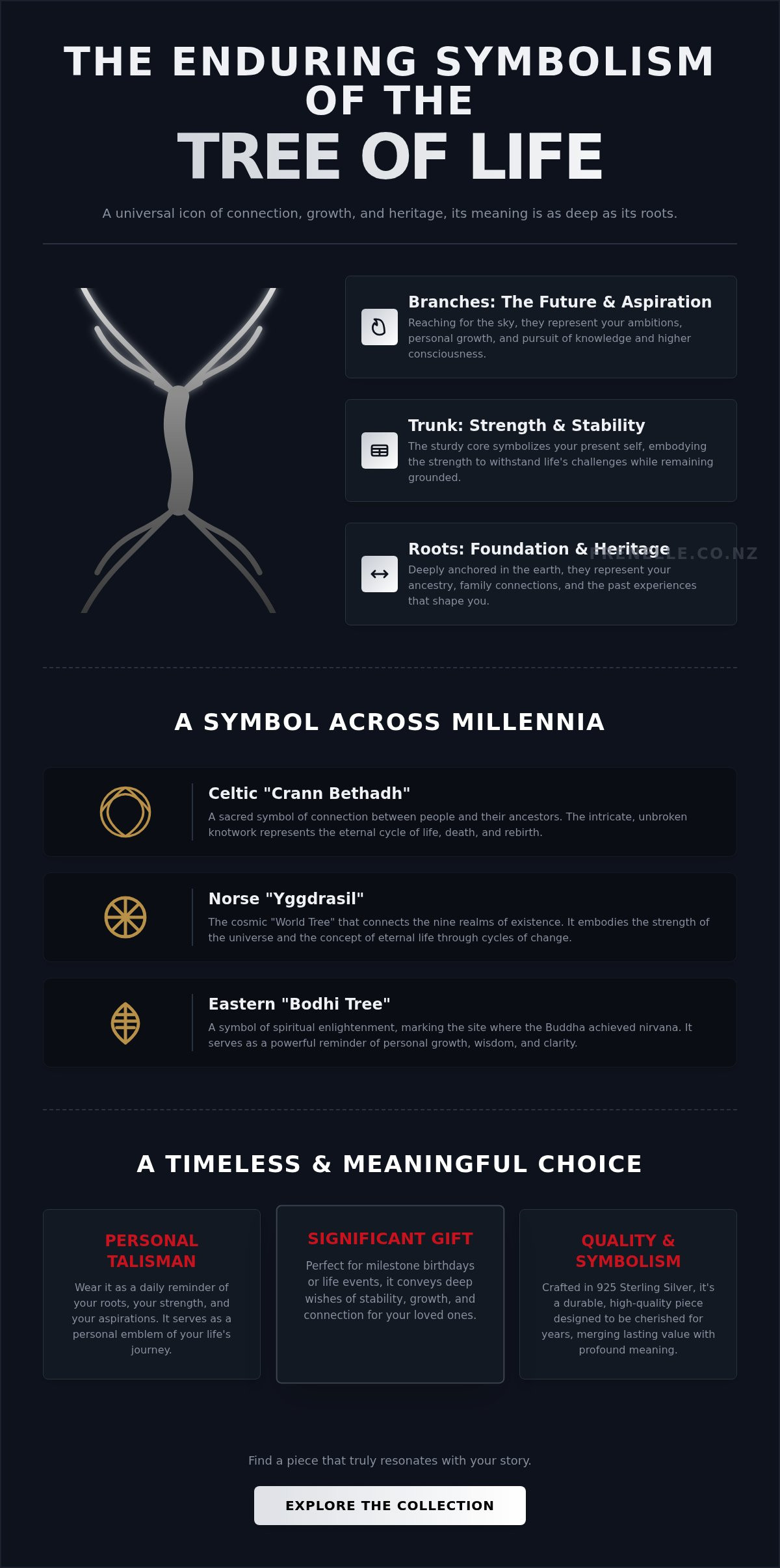
To truly understand the tree of life, you have to look at its three distinct parts. Each section carries a specific meaning that resonates with the human experience:
This symbol resonates so deeply because it mirrors the natural cycles we see every day. Trees undergo constant transformation, shedding leaves in the autumn and blooming again in the spring. This reflects our own seasons of life, reminding us that change is necessary for growth. Many people find comfort in the universal symbol of the Tree of Life because it suggests that even when things seem dormant, new life is just around the corner.
There is also the botanical concept of "as above, so below." In a healthy tree, the spread of the branches often mirrors the spread of the roots below the surface. This teaches us about balance. To reach great heights, we must have equally deep roots. At Frenelle, we see how often our customers are drawn to this imagery. It’s an innate spiritual pull. Humans have relied on trees for shelter and life for millennia, so it’s only natural that we find such profound meaning in their form.
The tree of life isn't a modern trend found only in jewellery boxes. It's an ancient symbol with roots stretching back to archaeological findings in the Middle East dated around 3000 BCE. From there, it travelled through Europe and Asia, with each culture adapting the image to reflect their own spiritual beliefs. Despite these differences, a common thread unites them all. The tree serves as a vital bridge between the heavens and the earth. Its roots ground it in the physical world while its branches reach for the divine.
Ancient Celts held the "Crann Bethadh" in high regard. When tribes cleared land for new settlements, they left one great tree standing in the centre to provide shade and a sacred meeting place. This tree symbolised the connection between the people and their ancestors. You’ll often find this history reflected in the knotwork designs of modern Celtic jewellery. These flowing, unbroken lines represent the eternal cycle of life. Norse mythology offers a similar perspective through its own cosmic tree. Yggdrasil is the Norse "World Tree" that connects nine distinct realms. It represents the strength of the universe and the concept of eternal life, even through periods of great change.
In Eastern traditions, the symbol takes on a meditative meaning. The Bodhi tree is the most famous example, marking the site where the Buddha achieved enlightenment in India roughly 2,500 years ago. It stands as a powerful reminder of personal growth and spiritual clarity. Ancient Egyptian mythology also embraced the tree, linking it to the Ennead, their primary group of nine deities. They believed the tree of life held the secrets of the creation process and the sequence of life. Meanwhile, Mesoamerican cultures like the Maya viewed "World Trees" as the literal axis of the world, connecting the four cardinal directions. Whether you're drawn to the spiritual awakening of the Bodhi tree or the tribal strength of the Celts, you can find a piece that resonates with your story in our collection of meaningful jewellery.
While the tree of life has roots in ancient spirituality, it has evolved into a staple of modern New Zealand jewellery collections. It's no longer just a sacred symbol found in history books; it's a wearable piece of art. Many people treat these pieces as a personal talisman, keeping a physical reminder of their values close to their skin throughout the day. This transition from a religious icon to a fashion favourite happened because the symbol resonates on a human level that transcends specific beliefs.
The design is incredibly versatile. You'll find it featured in delicate silver necklaces, bold drop earrings, and adjustable bracelets. Most designs include a circular frame surrounding the branches. This circle isn't just for aesthetics. It represents unity, wholeness, and the infinite cycle of existence. It holds the branches and roots together in a balanced composition that suits both casual weekend wear and formal evening outfits. At Frenelle, we see how this balance appeals to shoppers looking for pieces that offer both beauty and deep meaning.
Life isn't always smooth sailing. The tree of life represents the ability to weather the storm. Just as a sturdy tree stands firm against the wind, this symbol reminds the wearer of their own resilience. It's about the idea of blooming where you're planted. Many customers choose these pieces during major life transitions, such as starting a new career or moving to a new city in New Zealand. It serves as a quiet, constant reminder of one's potential to grow through change and reach toward the light despite any obstacles in the soil.
This symbol is perhaps the most popular choice for gifting because it acts as a literal family tree. The roots represent ancestors and heritage, while the branches represent the younger generations spreading their wings. For Kiwis with family living overseas, wearing a pendant like this can feel like a bridge across the ocean. It's a top choice for Mother’s Day or multi-generational gifts. It honours the deep connections that keep a family grounded while celebrating the individual growth of every family member. We find that:
Choosing this motif means you're wearing a story that is uniquely yours. Whether it's a gift for a loved one or a treat for yourself, it remains a classic because the themes of family and strength never go out of style.
Selecting a tree of life pendant is a thoughtful process that goes beyond simple aesthetics. You aren't just buying a piece of jewellery; you're sharing a story of connection and endurance. To find the perfect match, start by looking at the recipient's current collection. If they typically wear "modern minimalist" styles, a fine-line silver pendant will integrate seamlessly into their wardrobe. For those who prefer a bold statement, look for larger designs with thick branches and intricate detailing.
Material choice is a vital factor for both longevity and meaning. Sterling silver is a top priority for many New Zealand shoppers because it offers a bright, contemporary look that suits roughly 85% of daily outfits. If the occasion is a landmark anniversary or a significant "round" birthday, gold or rose-gold finishes provide a timeless warmth. High-quality materials ensure the piece doesn't just look good today but remains a part of their life for years to come. A tree of life gift should always be accompanied by a note explaining its specific meaning to ensure the recipient understands the depth of your sentiment.
The "growth" aspect of this symbol makes it a perfect fit for young adults starting new chapters. Whether it's a 21st birthday or a university graduation, the tree of life represents the transition from deep roots to reaching for the sky. Choose minimalist designs that are comfortable for everyday wear, allowing them to carry this reminder of home into their new career. You can add an extra layer of personalisation by pairing the pendant with birthstones, making the gift feel bespoke and uniquely theirs.
During times of loss or personal struggle, this symbol offers a quiet, powerful message of resilience. It represents the eternal cycle of life, where even after a harsh winter, the leaves return. The comforting nature of the "roots" and "connection" symbolism reminds the wearer that they're grounded and supported by family. In these instances, look for a "flowering" design. These intricate patterns represent rebirth and the strength to bloom again. It’s a gentle way to provide hope without using too many words.
Ready to find a piece that tells your story? Browse our curated collection to find the perfect tree of life pendant for your next gift.
Choosing the right metal for a piece as meaningful as the tree of life is essential for both longevity and aesthetic appeal. 925 Sterling Silver stands out as the premier choice because it balances beauty with high performance. While pure silver is too soft for daily wear, the addition of 7.5% copper in sterling silver provides the structural integrity needed to support those delicate, interlocking branches. This ensures your jewellery remains a lasting heirloom rather than a temporary accessory.
The cool, reflective tone of silver offers a striking contrast to the organic, flowing lines of the tree of life symbol. This metallic sheen mimics the way light filters through real leaves, creating a piece of jewellery that feels vibrant and modern. Because silver is a precious metal, it won't rust or degrade, making it a reliable companion for a symbol meant to represent eternal growth and family heritage. It's a metal that ages gracefully, much like the tree it depicts.
Frenelle focuses on bringing this high-quality craftsmanship to New Zealanders at prices that remain accessible. We believe that everyone should be able to wear a symbol of their journey without the heavy price tags found in traditional high-end retail. Our Auckland-based team carefully inspects every piece to ensure the casting is precise and the finish is flawless before it reaches your door.
New Zealand's coastal air and varying humidity levels can accelerate the natural tarnishing process of silver. To keep your jewellery bright, we recommend using a specialised silver cleaning cloth rather than liquid dips. These cloths are perfect for reaching into the small gaps between the branches of your tree of life pendant. Always store your pieces in a dry, cool spot. This prevents the fine metal branches from snagging on other items or bending out of shape when you aren't wearing them.
At Frenelle, we operate with a "Buy with confidence" philosophy. As a family-owned business run by Dennis and Judy Wood, we take personal pride in every order we ship. We curate our Tree of Life collection specifically for New Zealand tastes, focusing on designs that range from modern minimalist styles to traditional Celtic-inspired pieces. You aren't just a transaction to us; you're part of a community that values quality and local reliability. Explore our collection of Tree of Life pendants and earrings to find a piece that resonates with your personal story.
The tree of life represents more than just a beautiful pattern; it's a profound connection to your roots and a celebration of personal growth. You've discovered how this ancient symbol spans diverse cultures and why high-quality materials like 925 Sterling Silver make it a lasting keepsake. Whether you're choosing a piece for its spiritual meaning or its timeless aesthetic, the right jewellery serves as a daily reminder of your unique journey through life.
As a family-owned business based in Auckland, Dennis and Judy Wood take personal pride in offering pieces that combine expert craftsmanship with boutique affordability. Our collection features 18K Gold plating and premium metals, all backed by our "Buy with confidence" guarantee. You're supporting a local New Zealand boutique that values trust and accountability. We treat every customer as an individual and always welcome your feedback on our curated designs.
Browse the Frenelle Tree of Life Jewellery Collection
Find a piece that resonates with your spirit and wear your story with pride today.
The Tree of Life symbolises a fresh start on life, positive energy, and a bright future. It represents your personal growth into a unique person, just as branches grow upwards to the sky. Many wearers choose this symbol to represent their connection to family and ancestors. In a 2023 survey of jewellery trends, botanical themes like this remained in the top 5 most popular motifs for meaningful gifts.
The Tree of Life is a symbol found in many religions and philosophies, though it isn't exclusive to one faith. You'll find it in Christianity as the tree in the Garden of Eden and in Buddhism as the Bodhi tree where Buddha reached enlightenment. Because it appears in so many cultures, it's considered a universal icon of life and connection. It's a safe choice for a gift even if you aren't sure of the recipient's specific religious beliefs.
A circle around the tree of life represents the cycle of life, eternity, and the inclusive nature of the universe. The circle provides a frame that signifies the world or the infinite connection between all living things. In jewellery design, this enclosure also provides structural integrity to the delicate branches. This ensures your pendant stays durable for daily wear while maintaining its symbolic meaning of wholeness.
A Tree of Life necklace makes a thoughtful sympathy gift because it represents eternal life and the endurance of the soul. It offers comfort by reminding the wearer that their loved one's legacy continues to grow through the family branches. Many grief counsellors suggest that symbolic jewellery can provide a physical touchstone for those mourning. It's a gentle way to show you care without using words that might feel inadequate during a difficult time.
A Family Tree focuses specifically on your direct ancestry and bloodline, often featuring names or birthstones. The tree of life is a broader spiritual symbol representing the interconnectedness of all living beings and the universe. While both use the tree motif, the latter is more about personal growth and cosmic balance. You might choose a family tree for a grandmother's gift and the broader symbol for a graduation or milestone birthday.
Sterling silver is an excellent choice for a pendant because it's 92.5 percent pure silver, making it durable for everyday use. It's also hypoallergenic, which is vital for the 15 percent of people who have sensitivities to base metals like nickel. This metal provides a bright, reflective finish that highlights the intricate details of the branches. At Frenelle, we recommend sterling silver for its balance of high quality and affordable value.
In Celtic culture, the Tree of Life is known as Crann Bethadh and represents the harmony of nature. The Celts believed trees were ancestors of mankind and provided a gateway to the spirit world. The roots reached into the lower world while the branches stretched to the heavens, connecting the two realms. Ancient Celtic tribes would leave a single large tree in the middle of cleared fields to serve as a communal meeting place and a source of protection.
Clean your intricate charm by soaking it in a bowl of warm water with two drops of mild dish soap for 10 minutes. Use a very soft toothbrush to gently reach between the fine branches and leaves where dust collects. Rinse it under clean water and pat it dry with a lint-free cloth immediately. Avoid using harsh chemical cleaners, as these can damage the finish of the metal or any inset stones like Cubic Zirconia.